Your shoulders are the most mobile joints in your body. That mobility is a feature, not a bug. But it comes with a trade-off: more range of motion means more opportunities for things to go wrong. Most gym-related shoulder injuries don’t happen all at once. They build slowly over months of poor movement patterns, skipped warm-ups, and ignored early warning signs.
The good news is that most of those injuries are preventable. A targeted shoulder prehab routine, meaning exercises designed to prevent injury before it happens, can dramatically reduce your risk. This guide covers the anatomy behind shoulder stability, the exercises that matter most, and how to build them into your training week.
Key Takeaways
- The rotator cuff is your shoulder’s stability engine — four small muscles keep the humeral head centered in the socket during every pressing and pulling movement.
- Most shoulder injuries are overuse injuries — they develop over weeks or months, not in a single session.
- Prehab is proactive, not reactive — you don’t need to be injured to benefit from shoulder strengthening exercises.
- Warm-up quality matters as much as warm-up presence — five minutes of purposeful movement outperforms twenty minutes of random arm circles.
- Balance pressing and pulling volume — most lifters press far more than they pull, creating muscle imbalances that overload the rotator cuff.
- Programming matters — shoulder health work done consistently at low intensity beats aggressive protocols done occasionally.
What Is the Rotator Cuff and Why Does It Matter?
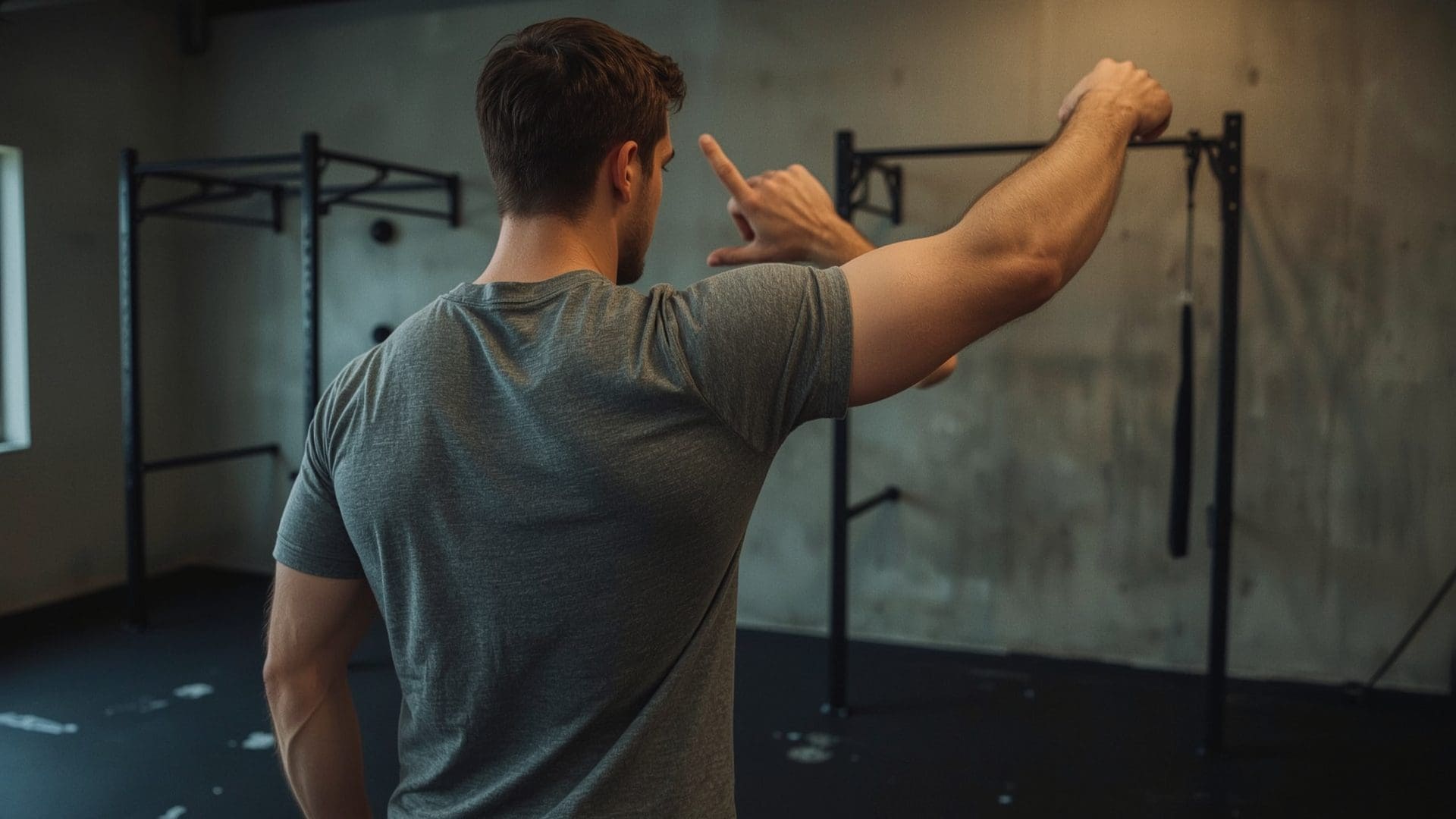
Quick Answer: The rotator cuff is a group of four muscles that stabilize the shoulder joint. They keep the ball of your upper arm seated in the shoulder socket during movement. Without a strong rotator cuff, the joint becomes unstable and injury risk rises sharply.
The rotator cuff isn’t one muscle. It’s four separate muscles working together as a unit. Each one has a specific job, and when one falls behind, the others compensate. That compensation is usually where pain starts.
The Four Rotator Cuff Muscles and Their Roles
Understanding which muscle does what helps you choose the right exercises. Generic “shoulder strengthening” won’t cut it if you’re missing a specific weakness.
| Muscle | Primary Action | Common Weakness Sign | Key Exercise |
|---|---|---|---|
| Supraspinatus | Initiates arm abduction (0-15°) | Pain at the top of a lateral raise | Empty can / Full can raise |
| Infraspinatus | External rotation of the humerus | Weakness in external rotation tests | Side-lying external rotation |
| Teres Minor | External rotation and adduction | Rear shoulder ache after pressing | Band external rotation at 90° |
| Subscapularis | Internal rotation of the humerus | Pain during horizontal pressing | Bear hug / Belly press test |
What Does the Rotator Cuff Do During Lifting?
Every time you press, row, or lift overhead, the rotator cuff fires to keep the humeral head, the ball at the top of your upper arm bone, centered in the glenoid fossa, the shallow cup of the shoulder blade. If the cuff is weak, the ball shifts slightly with each repetition. Over hundreds of reps, that micro-instability causes tendon irritation and inflammation.
This is why heavy bench pressers with underdeveloped rotator cuffs are prime candidates for impingement syndrome. The cuff can’t control the joint under load.
What Are the Most Common Gym-Related Shoulder Injuries?
Quick Answer: The most common gym shoulder injuries are rotator cuff impingement, rotator cuff tears, AC joint sprains, and biceps tendinopathy. Most develop from overuse, muscle imbalances, or poor movement mechanics rather than a single traumatic event.
Shoulder Injury Types, Causes, and Risk Factors
| Injury Type | Common Cause | Primary Risk Factor | Typical Pain Location | Recovery Timeline |
|---|---|---|---|---|
| Rotator Cuff Impingement | Repeated overhead pressing with poor mechanics | Weak external rotators | Front/top of shoulder | 6-12 weeks with prehab |
| Rotator Cuff Tear (partial) | Accumulated overuse or acute overload | High pressing volume, poor scapular control | Deep shoulder ache | 8-16 weeks conservative |
| AC Joint Sprain | Bench press with excessive width or fall impact | Grip too wide, overloaded dips | Top of shoulder | 4-8 weeks |
| Biceps Tendinopathy | Heavy curling and overhead loading | Poor humeral head control | Front of shoulder, upper biceps | 6-10 weeks |
| SLAP Tear | Repeated overhead throwing or pulling | Tight posterior capsule | Deep clicking in shoulder | 12+ weeks, often surgical |
Why Pressing Volume Creates Shoulder Problems
Most lifters follow programs heavy in pressing. Bench press, overhead press, dips, and push-ups all load the anterior, meaning front, shoulder structures. The posterior structures, the rear deltoid, infraspinatus, and teres minor, rarely receive equal attention.
This imbalance causes the shoulder to rotate forward over time. The humeral head drifts anterior, the supraspinatus tendon gets pinched under the acromion bone, and impingement follows. The fix starts with pulling more and pressing smarter.
What Are the Best Shoulder Prehab Exercises?

Quick Answer: The best shoulder prehab exercises target the rotator cuff directly using light resistance bands or cables. Side-lying external rotation, face pulls, band pull-aparts, and wall slides are the highest-value movements for long-term shoulder health.
External Rotation Exercises
External rotation is the single most undertrained movement pattern in the gym. It directly strengthens the infraspinatus and teres minor, which are responsible for keeping the humeral head from drifting forward under load.
Side-Lying External Rotation: Lie on your non-working side. Hold a light dumbbell (2-5 lbs) with your elbow bent 90° and your arm against your side. Rotate the dumbbell upward until your forearm points toward the ceiling. Lower slowly. This is your foundation movement for rotator cuff health.
Band External Rotation at 0°: Anchor a resistance band at elbow height. Hold with your elbow at your side, bent 90°. Rotate your forearm outward against the band’s resistance. This mimics the side-lying version in a standing position.
Band External Rotation at 90°: Set the band at shoulder height. Raise your elbow to 90° (like a field goal post position). Rotate your forearm upward until it’s vertical. This trains the rotator cuff in the position most relevant to overhead pressing.
Scapular Control Exercises
The scapula, your shoulder blade, is the platform the shoulder joint sits on. If the scapula can’t move properly, the entire shoulder system becomes inefficient. Exercises that strengthen the lower trapezius and serratus anterior are critical for scapular control.
Face Pulls: Set a cable or band at head height. Pull toward your forehead with your elbows high, finishing in an external rotation. This hits the rear deltoid, external rotators, and lower trapezius together. Use 15-25 reps per set at low to moderate load.
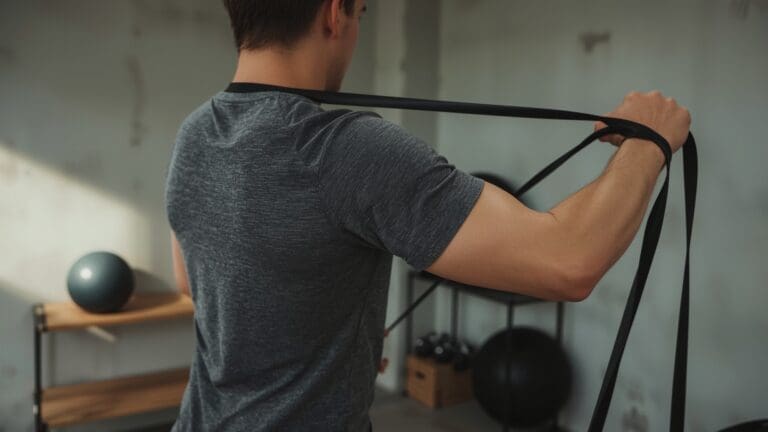
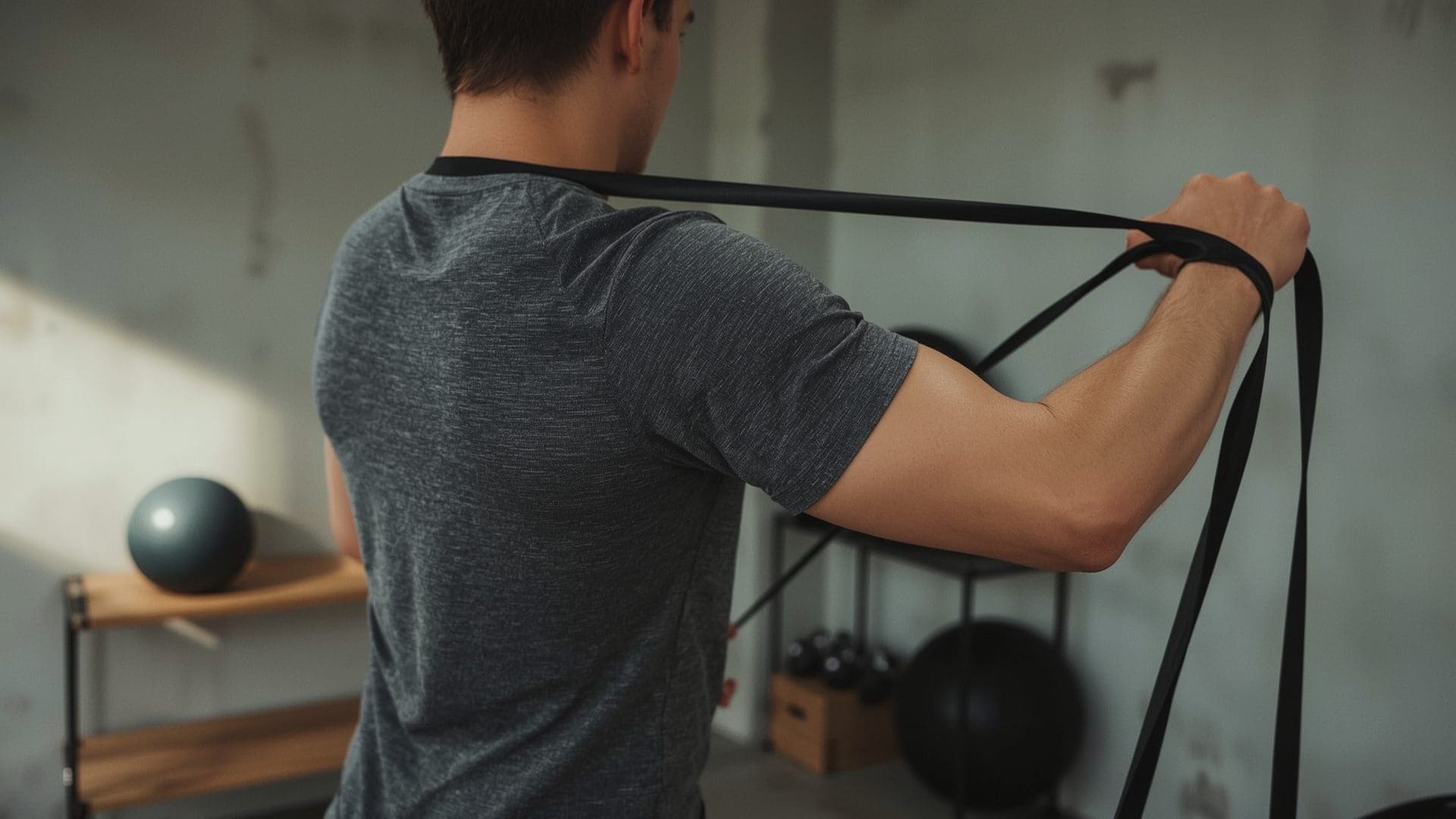
Band Pull-Aparts: Hold a resistance band in front of you at shoulder height with straight arms. Pull the band apart by squeezing your shoulder blades together. Keep your arms straight throughout. This reinforces scapular retraction and rear shoulder strength.
Wall Slides: Stand with your back against a wall and your arms in a goalpost position. Slide your arms overhead while keeping your lower back, elbows, and wrists in contact with the wall the entire time. This builds shoulder flexion control and scapular upward rotation simultaneously.
Shoulder Stability and Loading Exercises
Prone Y-T-W: Lie face down on a bench or floor. Raise your arms into a Y shape (overhead), then T shape (out to the sides), then W shape (bent elbows, elbows high). Use no weight or very light dumbbells (1-3 lbs). These positions isolate the lower and middle trapezius.
Serratus Wall Push: Place your hands on a wall and perform a push-up plus, meaning at the top of the push-up, push your shoulder blades apart as far as possible without bending your elbows. This trains the serratus anterior, which prevents the scapula from winging away from the rib cage.
Cable or Band Diagonal Raises: Pull a band from low and outside your body across your torso to high and inside, like drawing a sword. This trains the rotator cuff through multiple planes, which is more functional than isolated single-plane exercises.
What Should a Shoulder Warm-Up Look Like Before Lifting?

Quick Answer: A shoulder warm-up before lifting should take 5-8 minutes and include thoracic spine mobility work, band pull-aparts, arm circles, and one or two light sets of your first pressing movement. The goal is increased blood flow and joint readiness, not fatigue.
The 5-Step Shoulder Warm-Up Protocol
This sequence prepares the shoulder for pressing and pulling work in under eight minutes. Do it before every upper body session.
- Thoracic rotation (1-2 minutes): Sit in a deep squat or kneel on one knee. Place your hand behind your head and rotate your upper back toward the sky. Do 10 reps each side. Thoracic stiffness, meaning a tight mid-back, forces the shoulder to compensate for lost range.
- Band pull-aparts (2 sets x 15 reps): Use a light band. Focus on keeping the arms straight and squeezing the shoulder blades at the end point.
- Arm circles with reach (20 seconds each direction): Controlled, not momentum-driven. Start small and gradually widen the circle.
- Wall slides (2 sets x 10 reps): Focus on keeping contact with the wall at every point. Slow is better than fast here.
- Light pressing ramp (2-3 sets): For a bench session, start at 30-40% of your working weight. This primes the neural pathway to the rotator cuff before adding load.
Thoracic Mobility and Its Connection to Shoulder Health
The thoracic spine, the middle section of your back, directly influences how well your shoulder moves overhead. A stiff thoracic spine limits shoulder flexion. Your shoulder has to work overtime to make up for the range your upper back can’t provide.
Foam rolling the thoracic spine for 60-90 seconds before upper body work makes a measurable difference in overhead range. Pair it with thoracic extensions over a foam roller placed across your mid-back.
How Do You Program Shoulder Prehab Into Your Training Week?
Quick Answer: Add shoulder prehab exercises 3 times per week, either as part of your warm-up or as accessory work after your main lifts. Each session should take 8-12 minutes using 2-3 exercises at 15-25 reps with light to moderate resistance bands or cables.
Sample Weekly Shoulder Prehab Schedule
| Training Day | Prehab Placement | Exercises | Sets x Reps | Load |
|---|---|---|---|---|
| Push Day (Chest/Shoulders) | Warm-up | Band pull-aparts, Wall slides, External rotation at 0° | 2 x 15-20 | Light band |
| Pull Day (Back/Biceps) | Accessory (post-session) | Face pulls, Prone Y-T-W, Side-lying external rotation | 3 x 15 | Light band / 2-5 lb dumbbell |
| Leg Day or Rest Day | Standalone (optional) | External rotation at 90°, Serratus wall push, Thoracic rotation | 2-3 x 12-20 | Light band |
How Many Reps and Sets Should Prehab Exercises Use?
Prehab exercises are not strength exercises. They train muscular endurance and motor control, not maximal force output. Higher rep ranges, between 15 and 25 reps, with light resistance are more appropriate than heavy, low-rep sets. The goal is quality of movement and blood flow to the joint, not hypertrophy.
If you’re straining to complete a set, the load is too heavy. If you feel nothing, the load is too light. A 5 or 6 out of 10 on perceived effort is the target zone for prehab work.
Balancing Pressing and Pulling Volume
A healthy shoulder programming ratio is 1:1 or even 1:1.5 in favor of pulling. That means for every set of pressing you do, you do at least one set of pulling. Many lifters push three or four times more than they pull, which directly causes the muscular imbalances that lead to impingement and chronic shoulder pain.
Rows, face pulls, pull-downs, and pull-ups all count as pulling. Track your weekly sets of pressing versus pulling for two weeks. Most people are surprised by the gap.
What Programming Mistakes Cause Shoulder Injuries Over Time?
Quick Answer: The most common programming mistakes that cause shoulder injuries are excessive pressing volume, neglecting external rotation training, skipping warm-ups, poor overhead pressing technique, and not managing weekly training load. These errors compound over months before symptoms appear.
Common Shoulder Programming Errors
| Error | Why It Damages the Shoulder | Fix |
|---|---|---|
| Pressing to pulling ratio over 2:1 | Anterior shoulder overload, posterior weakness | Add 1 pulling set per pressing set |
| Grip too wide on bench press | Excess AC joint stress at 180°+ of elbow width | Grip shoulder-width to 1.5x shoulder-width |
| Skipping warm-up before heavy pressing | Cold tendon tissue is less elastic, tears more easily | Use 5-step warm-up protocol above |
| Ignoring early pain signals | Allows micro-damage to accumulate into structural damage | Use RPE scale; stop if pain exceeds 3/10 |
| No deload or volume management | Tendon tissue doesn’t recover as fast as muscle | Deload every 4-6 weeks; reduce volume 40-50% |
What Does Good Overhead Press Technique Look Like?
Overhead pressing is high-value but technically demanding. Poor mechanics under load are a direct path to impingement. Watch for three things: your grip width, your elbow position, and whether you’re achieving full overhead lockout without shrugging.
Your grip should be just outside shoulder width. Your elbows should be slightly in front of the bar at the bottom, not flared directly to the sides. At the top, the bar should be directly over your ears, not in front of your head. Shrugging to complete the movement means your thoracic spine lacks the extension to support true overhead range.
How Do You Know If Your Shoulders Need More Prehab Work?
Quick Answer: Signs your shoulders need more prehab work include clicking or catching during pressing movements, pain that lingers more than 24 hours after training, weakness in external rotation tests, and shoulder elevation during heavy rows or presses. These are early warning signals, not emergencies.
Self-Assessment Checks for Shoulder Health
You don’t need a physical therapist to notice early warning signs. These quick checks take less than two minutes.
External Rotation Strength Test: Stand in a doorway with your elbow at 90° and your upper arm at your side. Press the back of your hand outward against the door frame. If one side feels noticeably weaker, that rotator cuff needs targeted work.
Overhead Mobility Test: Stand with your back against a wall. Try to raise both arms overhead until your hands touch the wall without letting your lower back arch. If you can’t reach the wall without compensating, you have a shoulder flexion or thoracic mobility deficit.
Impingement Screen: Raise your arm forward to 90°, then internally rotate it (thumb pointing down). If this produces pain in the front or top of your shoulder, that’s a classic impingement pattern. Don’t push through this. Address it with external rotation work and reduce pressing volume temporarily.
What Role Does Sleep and Recovery Play in Shoulder Health?

Quick Answer: Tendon tissue repairs during sleep, not during training. Chronic sleep deprivation, under 7 hours per night, slows tendon collagen synthesis and raises injury risk. Recovery quality is as important as exercise selection for preventing shoulder injuries long-term.
Tendons don’t get the same blood supply as muscles. They heal slower and respond to stress differently. Collagen synthesis, the process that repairs and reinforces tendon tissue, peaks in the 24-72 hours after training stress but requires adequate sleep and protein intake to complete.
If you’re training your shoulders 4 or more days per week without enough recovery, you’re accumulating micro-damage faster than your body can repair it. This is the definition of an overuse injury in progress.
Aim for 7-9 hours of sleep per night. Consume 0.7-1g of protein per pound of bodyweight daily to support tendon repair. Both of these factors compound your prehab work and make it significantly more effective.
Frequently Asked Questions
Can I do shoulder prehab exercises if I already have shoulder pain?
Yes, in most cases. Light band exercises and external rotation work are often prescribed as part of rehabilitation, not just prevention. But if your pain is sharp, worsening, or accompanied by weakness in the arm, see a physical therapist before continuing any shoulder training.
How long does it take to see results from shoulder prehab exercises?
Most people notice improved shoulder comfort during pressing movements within 4-6 weeks of consistent prehab work done three times per week. Structural tendon adaptations take longer, typically 8-12 weeks of consistent loading, because tendon tissue remodels more slowly than muscle tissue.
Are resistance bands as effective as cables for rotator cuff training?
For most prehab purposes, resistance bands and cables produce comparable results. Bands increase resistance as they stretch, which can make the end range of external rotation harder. Cables provide constant tension throughout the movement. Both are valid tools. The best option is whichever one you’ll actually use consistently.
Should I avoid bench pressing if I have a rotator cuff issue?
Not necessarily. Adjusting grip width, reducing load, and modifying range of motion can allow continued pressing while the rotator cuff is addressed. Touch-and-go repetitions instead of full pause at the chest also reduce stress on the anterior capsule. Work with a physical therapist to modify, not eliminate, pressing if possible.
What is scapular dyskinesis and is it related to shoulder injuries?
Scapular dyskinesis refers to abnormal movement or positioning of the shoulder blade during arm motion. It’s commonly associated with rotator cuff impingement and is often caused by weakness in the lower trapezius and serratus anterior. Exercises like wall slides, prone Y-T-W, and face pulls directly address it.
Is overhead pressing safe for people with previous shoulder injuries?
Overhead pressing can be safe after a shoulder injury if the movement is introduced gradually and the rotator cuff is sufficiently strong. Landmine presses are a common starting point because the angled path reduces direct overhead stress. Progress to strict overhead pressing only after you can pass the overhead mobility test without compensation.